


Strawberry and lychee flavoured tea blend
Pretty Lady
€9.76
Choose a format

The different types of tea, from delicate white tea to robust black tea, unique yellow tea and aromatic wulong (oolong) tea, offer an extremely varied range of flavors. Each color of tea is characterized by specific plucking and processing methods, influencing its aromatic profile and benefits.

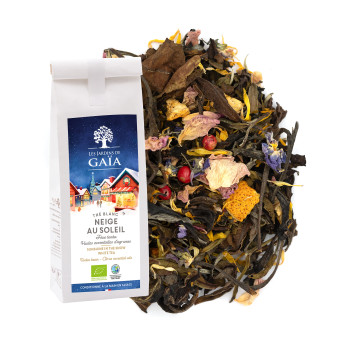


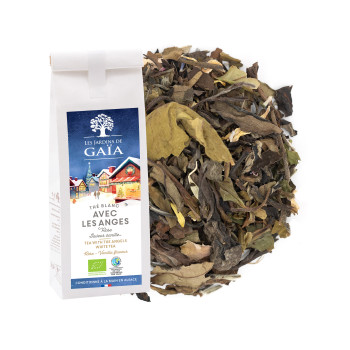


Tea is one of the world's most popular beverages, appreciated for its diversity of flavors and rich cultural traditions.
White tea is a specialty of China's Fujian province. The fruit of very selective plucking, its very slight oxidation is due to its withering in the open air. As it has not been rolled, it has a natural appearance, and as the leaf cells remain intact, it needs relatively hot water to infuse and release its delicate, often very fruity and sweet aromas. Among the most famous white teas are Bai Hao Yin Zhen and Bai Mu Dan.
Originating in China, yellow tea is made in the same way as green tea, but instead of being dried for storage, the leaves are wrapped for a day or so in bundles of damp cloth using a technique known as "étouffage". This particular processing stage enables yellow tea to develop the sweet, velvety, totally bitter-free flavors that connoisseurs so appreciate.
Popular in China, Japan and Korea, green tea, also known as virgin tea, is said to be non-oxidized, as its oxidation rate is less than 10%. Its rapid processing after plucking in a wok (dry heat) in China, or in a steamer (moist heat) in Japan, stops the natural oxidation process and preserves its freshness and characteristic green color. Long Jing and Bi Luo Chun in China, or Sencha, Matcha and Gyokuro in Japan, are among the best-known and most appreciated vintages.
Wulong tea, which means "black dragon" in Mandarin, is also known as "oolong" or "blue-green" tea, and lies somewhere between green and black tea in terms of oxidation. Originating in China's Fujian province and now a specialty on the island of Taiwan, it's famous for its complex aromas, the result of a delicate transformation process that includes wilting, brewing, enzymatic fixation, rolling and firing of the sometimes highly complex leaves. The result is an incredibly diverse range of flavors. There can be a world of difference between the aromatic profile of a Baozhong, a Dong Ding or a wulong from India.
Black tea is the result of complete oxidation, hence its black color. Its aromas are robust and keep well over time. Originally from China's Fujian province, it is now produced in many other countries, particularly India and Sri Lanka. It is the easiest to prepare and the most widely consumed tea in the world. The precise methods of plucking and processing greatly influence its taste, which explains the major differences between a Qimeng(Keemun) from China and a Darjeeling from India, for example. It is used to make famous classic blends such asEnglish Breakfast andEarl Grey.
Often likened to pu'er (puehr) from Yunnan in China, dark tea is a member of the family of post-fermented teas. Presented in bulk or as compressed leaves in various forms, they are appreciated for their dark-colored infusion with rich, original tertiary aromas that can evoke undergrowth, damp earth... When young, however, they often have tannic, fruity aromas reminiscent of green tea. Dark teas such as pu'er have a very long shelf-life and, like fine wines, offer a very interesting tasting experience that evolves over time.
1. Tea is stimulating. The beverage helps you concentrate and improves your mental and physical capacities by providing the body with energy in a gentle, diffuse way over time.
2. Tea has antioxidant properties. In other words, it contributes to the proper functioning of numerous organs and helps slow down cellular degradation.
3. Tea helps control weight gain through its contribution to renal elimination functions
Drinking organic tea allows you to enjoy its benefits without pesticides or chemicals, preserving your health and that of the environment. What's more, organic tea is grown with respect for local ecosystems and farming communities, guaranteeing better quality and sustainable practices.


 English